Showing posts with label Kylie Minogue. Show all posts

Wednesday, July 25, 2012

Adventure #13: Meeting the "Pop Perfection" of Darren Hayes

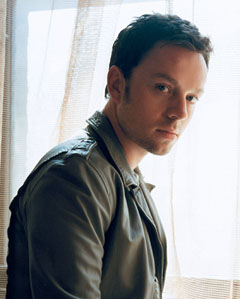
Remember Savage Garden? Did you know their former frontman, Australian singer/songwriter Darren Hayes, has released four solo albums in the last ten years? ...Yeah, it took me a bit to catch up with that, too, being American and all, but he's been a new candy for me. Well, he’s not exactly new for me. I have flavored some of his music before but didn’t take a leap for him until recently.

HISTORY

Let’s take a (dry) rundown of my discovery of him nearly two years ago:
  • Hear “I Knew I Loved You” again on radio (it eventually becomes my favorite Savage Garden song; plus, gorgeous Kirsten Dunst is featured in the music vid)
  • Remember/Renew curiosity of Savage Garden
  • (Wikipedia) Research Savage Garden
  • Come across name “Darren Hayes” and research
  • Discover 2004 tongue-in-cheek single “Pop!ular” reached #1 on U.S. Dance/Club Play chart
  • Like “Pop!ular” but have interest in little else
  • Use gift card to get Savage Garden Affirmation, which contains “I Knew I Loved You”
Last summer, I had some free music downloads, part of which I used to get “Pop!ular” and a few tracks off the album it’s from, The Tension and the Spark (Darren’s second album). About eight months later, I listened to his first and fourth albums, respectively, Spin and Secret Codes and Battleships on Spotify, generally liking them and occasionally listening to them more often.

DARREN & ME

Then, I moseyed along until May of this year (two months ago) when I realized a similarity in the songs he writes to the songs I write (and consequently, completed my collection of his music by ordering physical copies of his albums). This was HUGE! When I had thought about my songs, they seemed to be about...nothing...or, at least, nothing I could give a synopsis of, I felt. They're driven by feelings. Most songs are inspired by feelings and fused with emotion, but I've seen that the focus of my songs is completely about subconscious feelings becoming manifest. Darren's and mine don't exactly sound the same, but the focus and drive are similar. We each have our own separate patterns of addressing similar motives that are influenced by our own musical paths. Still, our songs seem to rest in an intuitive space (hence the mention of mine seeming "to be about...nothing;" the images we typically use aren't exactly tangible).

I had been looking at the current pop scene, especially Katy Perry and Lady Gaga, as well as other songs, but I couldn’t find many that I would say my songs were like. Darren’s have come the closest. When I figured this out, so many things in his songs opened up to me, and I could not believe what I was experiencing while listening to his music. Everything he sang made sense. There was no deciphering the metaphors or translation of events in my life to make them applicable to the song. Everything fit perfectly, like I could be saying those lyrics. It was one of those connections you have with someone and you just sense and feel that, “I need to know this person better,” or, “I want to meet this person.” It’d be awesome to meet him and chat about songs and ideas—perhaps, someday, if our lives cross. His songs are so honest to me. Perhaps, they are even too honest…


THE DOWNSIDE

Something he has been prized for is that, often, rather than taking a more commercial pop route, he musically and lyrically tends to take a more sophisticated, intellectual journey, which is a great aspect that I like (and makes me feel smart). But, his music is very artful and somber to the point that it can be depressing for me. At the same time, I love his music, because, like I said, my connection is so close; but it is easily depressing for me, because I don’t have to work to connect. His music naturally recalls emotional places I’ve been by just hearing those words and, especially, singing them.

HIS MUSIC

He does have light and positive songs but mostly on Spin, from which my favorite track is “I Can't Ever Get Enough of You.” His transition to heavier subjects is sampled on Spin’s title track but was also previewed in 1999 with the opening and title track of Savage Garden’s Affirmation. The music of these songs is still upbeat and fun, but the discussion is thoughtful.

His darkest album is The Tension and the Spark, where he explores themes of dark and light with, even, track titles as “Darkness” and “Light.” The Tension and the Spark is an amazing album, overall, despite its dark themes. It is brilliantly crafted with genius electronic production, and, honestly, deserves every one of the four stars Allmusic gave it (I tend to agree with Allmusic). “Darkness,” especially, is a song that surprised me how closely I connected with it when I really listened. I felt like someone had been watching me from my window… Other songs I most connected with from the album, whether emotionally or hearing my own thoughts in someone’s song, were “I Like the Way,” “Hero,” “Unlovable,” and “Love and Attraction,” but really, I side with the whole album.

His third release, the highly experimental and personal double album This Delicate Thing We've Made, continues a somber approach but has a more intellectual feel. The album fits together almost like a story with most of the songs leading up to the next, though they are strong enough to stand alone (not that they're mixed together but that they're like chapters in a novel). Overall, the entire album is incredibly elegant. My favorite track is the beautiful single “Casey” (which the last minute and a half of the album version is gorgeous but, sadly, was taken out to make it appropriate as a single, even though it emphasizes, what I believe to be, the main point of the song: “I wanna be someone”), which he wrote about his sister Tracey (rhymes with Casey; ooooooh, clever boy). Other tracks that especially stand out to me are “A Fear of Falling Under,” “Listen All You People,” “Neverland,” “Words,” and “The Tuning of Violins.” The whole album is wonderful, though.

His latest album, Secret Codes and Battleships, released autumn of last year, brings him back to commercial pop senses but without losing lyrical merit. I, especially, have taken a liking to “Don’t Give Up” and “Black Out the Sun,” which is another one that encapsulates emotions I have felt and instantly recalls them (and vocally, it’s fun to sing). He originally wrote “Black Out the Sun” for Leona Lewis but kept it for himself. Lead single “Talk Talk Talk” sounds like a sequel to “Words.” When I watched the music video for “Bloodstained Heart,” I cried at the end, and then I watched it again, crying throughout from understanding deeper the symbolism. I get choked singing it or even when I explain the song and video to others.

THE UPSIDE

I’ve learned several things from Darren, though. One thing I’ve understood is that this connection I’ve had is only one part of me, and it is good to have someone to connect to, even with my darker experiences. I connect with lots of artists, but my favorites tend to be The Corrs and Kylie Minogue. I’ve often thought myself the male version of Andrea Corr, lead singer and lyricist for The Corrs, and still, I see myself more in her personality than I do Darren’s. Both Darren and The Corrs appeal to the dreaminess of hopeless romantics. Andrea’s solo lyrics and her lyrics with The Corrs, I have felt, are words I could have written myself and that speak for me, just as with Darren’s. I think why I may find Darren's lyrics particularly special is that he is male, and there is an inherent part of me, perhaps initially subconscious, that recognizes and connects with this. The difference between The Corrs and Darren is that while The Corrs (and Andrea; I do like Sharon Corr’s solo work, as well) are willing to go to the dark places that Darren goes, they offer a glimmer of hope, whereas Darren goes there to reveal and explore but doesn’t always offer a way out. He takes you there to experience it with him (but it is fair to say that when you are in those dark places, sometimes hope is forgotten or not desired because of the pain in the letdown of what was once hoped).


I enjoy all of Kylie’s songs, but I most connect with the ones she writes herself, especially “No More Rain” and “Looking for an Angel” (both metaphors; *gasp* intriguing). She goes to dark places on 1997’s introspective Impossible Princess, in which she wrote or co-wrote all the songs, but, like The Corrs, she offers a way out, even if it is just a cry for deliverance. Mostly, Kylie appeals to my fun side. From having seen her live and what I’ve seen of her in interviews, Kylie is pure fun, as also found in her choice to release bubbly, danceable songs. Understandably, she's been referred to as a dance force of light (interestingly, Darren's idol, Madonna, compared to Kylie, has been seen as a dark force; I also like Madonna but more to get groovy with). Through it all, Kylie still is able to express love and its vulnerability (see my paper on that here).

Basically, in general (and for me), Kylie presents the fun and vulnerabilities of love, The Corrs the reassurances of love, and Darren the fears in love. Darren doesn’t really seem far off from The Corrs and Kylie. All three of these artists explore romance and art with class that appeals to me, reassuring what I’ve evaluated about my interests (as described here).

One thing I speculate about Darren from his songs is that he holds things very precious. This is even suggested in the album title This Delicate Thing We've Made and is something I relate to. It makes him a true lover and is a characteristic I'm attracted to to add him to my collection of favorite artists. But while I do like his more darker themes for their own sake, I wish for more of the songs about the positive aspects of love, like he does in “I Can't Ever Get Enough Of You” and “I Knew I Loved You,” but I'll appreciate whatever he turns out.

Of Darren himself, his voice is very beautiful. He uses falsetto a lot, and it is equally pleasing. His voice has a soft, youthful timbre (as do Kylie and Andrea), as does mine, I’ve been told. Last year, I sang “Ten Minutes Ago” from the musical Cinderella for a voice lesson. My teacher said I sounded great, but the only problem with my performance was that I sounded sixteen and the character needed to be old enough that his parents were irritated he wasn’t married yet (so, at least ten years older...hmm).

Darren’s vocal range is very similar to mine, making him fun and comfortable to sing along with. I had previously been introduced to Mika, who also sings high into his falsetto range, but his isn’t always nice sounding. Hearing that falsetto made me afraid to use my own, but Darren’s has given me confidence to use it, as I have heard that my voice and falsetto are “pretty,” as well. When I have sang some of Darren’s and Savage Garden’s songs to others and then later showed them the recording, my audiences have mentioned similar pleasing qualities in my voice and his, though we each have our own value and sound like ourselves. Also, we have similar impulses on forming words when singing; that is, we naturally tend to emphasize the same letter sounds in pronunciation.

If anything, Darren has helped me reach another level of acceptance for my voice. It is what it is, and it can have a place as I find where to use it. It is okay for it to sound pretty and soft and young...or “unique.” And, like I said about his songs’ similarity to mine, it is okay for my songs to be what they are. The sound of Darren's “Unlovable” gave me faith in the few of my songs that lean to the experimental. “Unlovable” is done in a way that makes the song work, despite often possessing an almost disjointed melody, as a few of mine do. When I wrote them, I wasn't sure if they would work but completed them, anyway. Now, I see that as they are explored, an appropriate way of expressing them can be found, just as it was with “Unlovable.” I know some of my apprehension about my songs comes from a fear of revealing self-qualities expressed in the song. Tsk tsk. Courage, now. I'm sure as I embrace them their performance will smooth out and become whole, making them a treasure. They have a place, as what has been reiterated to me a lot this past year (not even an exaggeration; everywhere I turn, this comes up)—to quit hiding and offer what I have. And, honestly, I have been feeling more ready to share what I have with songs, poetry, acting, stories, my novels. Perhaps, finishing college soon has brought this to my mind, also, and given me the realization that I need to come forward in order for anything to happen, rather than hiding in the educational world. In all, Darren has brought it up for me, again.

So, if you don’t know much about Darren, check him out! It’s a shame his music is as rare as it is. He is a gem! You never know what you may find in store to experience with him, and you can see why critics call him genius and his work pop perfection.”

Monday, November 14, 2011

Grammy Nomination Picks 2012

This coming Grammy nominations will be announced November 30th, so for fun, I put together my own tentative picks for the coming Grammy nominations. Many categories have been restructured this year through combination or cutting. Distinction between sexes in performances have been combined to solo performances, and designation between duo/group performances and collaboration performances have been combined into one category per genre. This will cut the 109 categories to 78 categories.

NOTE: I am not a member of the Academy of Recording Arts and Sciences and this list is in no way OFFICIAL or reflective of their attitudes. Typically, there are five nominations spots in each category, but I've left some blank.  Nomination eligibility period was September 1, 2010 to September 30, 2011.

NOVEMBER 30TH UPDATE: My picks and the actually nominees are about as accurate as my last year's picks: some accurate; some right artist, wrong song; some right album, wrong category; etc.

Album of the Year:
21, Adele
Born This Way, Lady Gaga
Duets II, Tony Bennett and various
Record of the Year:
"E.T.," Katy Perry ft. Kanye West
"Judas," Lady Gaga
"Party Rock Anthem," LMFAO
"Rolling in the Deep," Adele
Song of the Year:
"Firework," Katy Perry; Written by Katy Perry, Mikkel S. Eriksen, Tor Erik Hermansen, Sandy Wilhelm, and Ester Dean
"Born This Way," Lady Gaga; Written by Stefani Germanotta Jeppe Laursen, Paul Blair, and Fernando Garibay
"Rolling in the Deep," Adele; Written by Adele and Paul Epworth
"Moves Like Jagger," Maroon 5 ft. Christina Aguilera; Written by Adam Levine, Benny Blanco, Ammar Malik, and Shellback
Best New Artist:
Nicki Minaj
Jackie Evancho
The Band Perry
Best Pop Solo Performance:
"Firework," Katy Perry
"Edge of Glory," Lady Gaga
"Rolling in the Deep," Adele
"Grenade," Bruno Mars


Best Pop Duo/Group Performance:
"Moves Like Jagger," Maroon 5 ft. Christina Aguilera
"The Lady is a Tramp," Tony Bennett ft. Lady Gaga
"Body and Soul," Tony Bennett ft. Amy Winehouse
"E.T." Katy Perry ft. Kanye West
Best Pop Vocal Album:
Born This Way, Lady Gaga
Loud, Rihanna

The Beginning, The Black Eyed Peas
Best Traditional Pop Vocal Album:
Duets II, Tony Bennett and various
21, Adele
The Gift, Susan Boyle
Best Contemporary R&B Album:
Pink Friday, Nick Minaj
4, Beyoncé
Best R&B Performance:
"California King Bed," Rihanna
"What's My Name," Rihanna ft. Drake
Best Rap Performance:
"Super Bass," Nicki Minaj
"How to Love," Lil Wayne
Best Rap/Sung Collaboration:

"Mirror," Lil Wayne ft. Bruno Mars
"Niggas in Paris," Jay-Z and Kanye West
Best Rap Album:
Tha Carter IV, Lil Wayne
F.A.M.E., Chris Brown
Watch the Throne, Jay-Z and Kanye West

Best Dance Recording:

"Put Your Hands Up (If You Feel Love)," Kylie Minogue
"(Tonight) I'm Loving You," Enrique Iglesias ft. Ludacris and DJ Frank E
"Call Your Girlfriend," Robyn
"Til the World Ends," Britney Spears
"Judas," Lady Gaga

"The Time (Dirty Bit)", The Black Eyed Peas
Best Dance/Electronica Album:
Femme Fatale, Britney Spears
Body Talk, Robyn
Nothing But the Beat, David Guetta
Sorry for Party Rocking, LMFAO
Best Country Solo Performance:
"Mean," Taylor Swift
"Dirt Road Anthem," Jason Aldean
Best Country Duo/Group with Performance:
"If I Die Young," The Band Perry
"Don't You Wanna Stay," Jason Aldean ft. Kelly Clarkson
Best Country Song:
"Today is Your Day," Shania Twain; Written by Shania Twain
Best Country Album:
Speak Now, Taylor Swift
Chief, Eric Church
The Band Perry, The Band Perry
My Kinda Party, Jason Aldean
Best Music Video, Short Form:
"E.T." Katy Perry ft. Kanye West
"Born This Way," Lady Gaga
"Rolling in the Deep," Adele

"The Time (Dirty Bit)," The Black Eyed Peas

Best Musical Theater Album:

The Book of Mormon

Sister Act

Friday, March 11, 2011

Adventure #7: Notes on My Study on People's Interests


Kylie Minogue
I have outlined an analysis of my experience with my interests and wonder if I am accurate in what I have come up with. I have not fully developed my ideas, so, please, feel free to tell me what you may think, whether I am headed in a profitable direction or you think I am on crack. All of this is my own ideas, so also, if you've heard some other studies or things like this, I'd be interested in knowing. Or, perhaps, you think this is all crap and goes without saying. Much of my intrigue with this topic stems from my work in acting. It would make sense to me that much could be figured about a character by looking at their interests, if given in the script.

A few months ago, I wrote an extensive paper on Kylie Minogue's song "All the Lovers," in which I analyzed the general message of her music (that paper can be found here). In my argument that she explored themes of love and vulnerability, I could not help but see deeper similarities between her and myself as I perused over her music in search of the themes she conveys. I saw that I valued many of the messages often presented in her music. Previously, I had been liking her music, but never had I explored why I may be drawn to it in the extent that I have. This led me to look at my other favorite music artists, like Shania Twain and The Corrs, and explore their common themes. At this time of analysis, I was exploring the music of Daniel Bedingfield and found a commonality with him, too. Of these artists--Minogue, Twain, Corrs, and Bedingfield--I found that all were sensual/sensuous persons with sultry vocals and hopeless romantic personalities undertoned with cheeky sass. They all (with possible exception of Bedingfield; I'm not sure) have been known as classy figures associated with elegance. Also, every diehard Corrs fan I have met is a fun-loving, loyal, gentle, and soft-spoken romantic. From the interviews I have seen of the four sibling Corrs, I sense that each one matches this definition, as well.

The Corrs
Feeling I matched these descriptions ("sultry vocals," perhaps, is debatable), I concluded that our interests are means of validating perceptions of ourselves and what we desire to become. In a sense (this is probably my weakest, least informed point), my argument is that our natural interests are reflective of Sigmund Freud's concept of the id--that is, unfiltered, natural desire--and ego--the realistic reasoning side of a person.

Perhaps, the need for deep-rooted interests with emotional connection comes from the superego's correction of the id (superego does this so we behave in a manner befitting society). Because of the actions of the superego, the ego can become confused. This is where interests come into play. When the ego is needing validation in balancing the id and superego, it turns to interests. In such, it finds safety and security in things that satisfy id while accomplishing superego.

Recently, in a class discussing the Doctrine and Covenants (some of the modern scriptures from The Church of Jesus Christ of Latter-day Saints) in which I am enrolled, we discussed the 88th Section, verse 40, which reads, "For intelligence cleaveth unto intelligence; wisdom receiveth wisdom; truth embraceth truth; virtue loveth virtue; light cleaveth unto light; mercy hath compassion on mercy and claimeth her own; justice continueth its course and claimeth its own." Basically, everything is attracted to its own; everyone is attracted to those like them. This makes total sense that people would be attracted to things that are like them. Their interests are reflective of who they perceive themselves to be or what they want to be. Interests give identity. They assure us of who we are. More can be said of us by our interests than we give credit for. SO MUCH of how we use interests as a means of identity goes unnoticed and is subconscious, just as how Minogue's music appealed to me, yet I did not fully seek to answer why. Further, it wasn't until after I had carefully selected and included these pictures of Minogue, The Corrs, and Twain in this blog post that I realized a similar theme of light in all of them. I'm sure something can be said about that. The purpose I find in exploring our interests and attractions is to discover what roles those interests play in developing our identities.

An example may be those who are interested in the hobby of hunting. It seems reasonable to say those individuals desire to be providers. They believe themselves to be providers, or they desire to someday become providers, and bringing home a kill expresses and re-establishes that desire and identity for them. (Of course, there are also other identity establishments that can draw people to hunting.)

Shania Twain
Our (desired) identity certainly says something for the people we desire as friends and with whom we attempt to reach out to, as well as whom we choose as a mate. Those in positions of popular desire, whether based on wealth, celebrity, talent, physical appearance, or whatever else, are commonly bombarded with social opportunities and interactions, because people's interests in them are driven by the desire to see those qualities in themselves. Someone's interest in a person could also be driven by the perceived identity that person gives them, whether by association with or by certain interactions received from that person. Also, just as my connection and interest with The Corrs and others celebrity artists, every person idolizes their own A-listers based on qualities they see in themselves or qualities they wish to see. It seems safe to say that one recognizes, even subconsciously, a certain likeness with or is fondly reminded of someone else like their favorite celebrities, actors, writers, fictional characters, etc.

Family is an essential part of one's identity. Our interest in them, then, is to validate and design our perceived identity. From an early age, our family unit, no matter how formed, trains and shapes the identity we take. If among our biological family, this is especially key, as we see similarities in how we look and how we behave temperamentally. Children, especially, are in the stage of developing an identity and often turn to their parents for guidance through the means of mimicry. Commonly, one of the parents is chosen by the child, more prevalently than the other, and as the child gets older, they speak most often about the parent they are most like. After all, this parent is of most interest to them, as they have established the earliest forms of their identity around this parent. To speak of them gives validity to oneself. However, these interests are among all family relationships, whether it be parent to child, sibling to sibling, aunt to nephew, or any other relationship. Seeing these similarities drive our interests to associate with them and, in turn, love and be loved by them. They form a facet of our identity, which interests us to seek validity of that identity from them and in them.

At times, family interest for someone may be minimal, because of a distracting interest in work or something else. They are seeking validity in an identity in something that their family does not offer. Some, though, do have interest in family life, but the identity they receive from their given family is not what they desire, so they turn to alternate means of identity.

People can only connect to and understand art (movies, TV shows, books/novels, paintings, sculptures, music/songs, architecture, etc.) on their own level of what speaks to them--them being made up of their own experience and personality. All that we know in life is our own experience (even if you witness or learn of someone else's experience, you are still in your experience when you see or learn it, and you process it according to yourself). Art is reflective of the human experience, often specifically to the creating artist's experience. It makes sense, then, to go about reading a work of art through one's own lens. We can only go through and process art from what we already know and understand, what we identify with and recognize in the world around us or in ourselves. In this way, we connect with art by understanding and identifying with it, even abstractly or if it is only to say, "Yes, I know that. I have been there. I understand it. I adopt that idea. It is a part of me." We gain preference for artworks and use that interest in them to validate our identity.

The role of religion in one's interests is another key part of one's identity, as they seek to answer the questions of their origins and creation--where did I come from--where am I going--what am I doing here (*ahem, while sober; not because of intoxication)? Some do find what they believe to be answers but do not highlight religion in their life, because they fill their life with finding validity in identity through alternate means. Others cleave unto their religion to re-enforce that identity they found. Our interests, too, come into play when we choose which religious establishment to identify with. Few do not find interest in the questions of origin, because they seek fulfillment of identity in other fields. MUCH MORE can be said about religion in this topic...but I haven't figured how it fits yet...and what else I have figured, I can't seem to find the words to explain what I understand.

The concept of personality types, or common combinations of emotional, attitudinal, and behavioral response patterns, is backed by association of interests. It would only make sense that those of similar tendencies would be drawn to each other, to similar careers, and to similar hobbies, as they share similar senses of identity and similar needs for validation.

Our interests change as we age, because our sense of identity changes over time, as well.

It seems fair to say that disinterest or lack of interest occurs when we perceive that the interest does not validate our identity or what we desire to perceive ourselves as. We do not connect with it, or else, we do connect but desire not to.

Depression seems to be the state in which one lacks interests and, consequently, lacks a sense of validity in their identity, or vice versa. Further, when someone's interests are not being recognized or accepted, depression can also result because of the same lack of validity.

There is so much more that goes along with this topic, that our interests validate our identity, but these are the basic things I have so far. It seems that it would be beneficial for people to look over their interests and discover what they are gaining by having these interests and why they have them.

What do your interests say about you?

Monday, January 31, 2011

Aphrodite's Birth in Kylie Minogue's "All the Lovers" Music Video

So, for my Mythology class, I had to write a paper on how a Greek myth is reflected in modern (after 1300 AD) art, so I chose Aphrodite's Birth in Kylie Minogue's "All the Lovers" music video. Actually, it was the day before the paper was due, and I had no idea what to do, and since I'd already written extensively on the music video and its song (which, that paper can be seen here), I was fairly familiar with it. AND as I wrote this paper, I giggled.A.LOT!

So, here's the myth of Aphrodite's birth: Cronus cut off the genitals of Uranus and threw them in the sea, which created foam in the water, and Aphrodite arose from the foam. My professor went haywire with my selection, declaring to our class that he only got through half of his grading during his grading time, because when he came to my paper, he had to watch the video and then look up other stuff. He wanted to show the vid to his classes but felt it was too "naughty." He really liked my paper but said he disagreed on some of the symbolism regarding Uranus's genitals, which is fine with me, because I'm not so sure I agreed with myself. I was mostly grasping at something to say, and what I did say sounded so silly it made me giggle. My professor said he saw symbols of opposites rather than the symbolism I mention. I agree. Opposites would be needed for fertilization. Someone from another section he teaches told me he even brought up my topic in their class. Last Friday, he was late to class, because he was writing a response letter to my paper. He gave me the letter and then spent ten minutes of that class day to discuss his and my ideas on the topic. He was very respectful through the whole thing, and I found it really cool he was so into my topic. Friday afternoon, he emailed me with more of his analysis. COOL!

Here is my paper:


Kylie Minogue’s music video for her single “All the Lovers”[1] symbolically depicts the birth of Aphrodite from the castration of Uranus to her rise from the foam in the sea.[2]  The event is suggested by the symbolic use of objects, environment, and people and helps promote Kylie to a new status in pop music with the release of her fittingly named latest album Aphrodite.[3]
            The genitals of Uranus are depicted in four clips at the beginning of the video.  The four clips include separately falling objects—a coffee cup, a milk bottle, marshmallows, and papers—spilling onto a city street.  The spilling cup full of coffee shows that just as one would get burned from hot coffee falling on them, the spilling coffee expresses the burning sensation of Uranus’s castration.  The white milk spilling from the bottle as it drops represents Uranus’s sperm as it flows across the surface of the pavement to fertilize the ground, while the dropping marshmallows represent his testicles.  This is suggested by their round shape and the sweetness that comes from their use.  Since there are several dropping marshmallows, it is depicting the power and fruitfulness of his loins as a god.  The papers fall from a freely opening briefcase someone is holding.  The briefcase falls open without its owner’s consent, signifying Uranus’s castration was not consensual.  Paper is commonly used to write and share ideas in a communication.  Their significance here is that just as they contain communicational code, their genetic code is spilling on the ground, like the fertilizing milk, to pass that code along.
The setting of the music video is a street surrounded by skyscrapers.  The placement of people in this environment helps the image that they are mere mortals, tiny, insignificant, and influenced by a higher power.  When these symbols of Uranus’s genitals are poured across the ground, their influence is felt by the mortals around.
The mortals strip to their undergarments and passionately kiss.  They are projected as the foam that rises from Uranus’s genitals.  The mortals, as foam, multiply in number and gather to form a mob that raises Kylie—accompanied by doves, an animal sacred to Aphrodite[4]—from within them and, therefore, demonstrating Aphrodite’s creation from the foam.
Later in the video, a white convertible releases white balloons from its opening top, depicting that Aphrodite (Kylie) has arrived and is releasing love into the world.  So many of the mortals gather to the mob by the end of the video that their group grows to be nearly as tall as the skyscrapers.  The people hear her song and flock to her, worshipping her as their goddess and deliverer.
Kylie’s appearance as Aphrodite helps promote her to the status of Goddess of Love in pop music.  From her first single “I Should Be So Lucky,”[5] Kylie explored the theme of love and the vulnerability that accompanies it, as she sang of dreaming that her hidden feelings for her love interest would be returned.  Over years she continued to explore the themes of love and vulnerability, but her peak of the themes came with the release of Aphrodite, a collection of songs solely dedicated to concepts of love, beauty, and the celestial, as they are associations of the Goddess.
Aphrodite helps promote Kylie to a new status among the pop music community, and that status is iconically symbolized as her appearance as Aphrodite in the “All the Lovers” music video, as it demonstrates the birth of Aphrodite and alludes Kylie as a representation of the Goddess. 


[1] All the Lovers. Dir. Joseph Kahn. Perf. Kylie Minogue. EMI, 2010. Film.  Lead single from Aphrodite.
[2] See Hesiod, Theogony 188-195.
[3] Minogue, Kylie. Aphrodite. Parlophone, 2010. CD.
[4] Berens, E. M. A Hand-Book of Mythology. New York: Maynard, Merrill, & Co., 1894. Print.
[5] Minogue, Kylie. “I Should Be So Lucky.” Kylie. PWL, 1988. CD.


Here is the vid. It is INCREDIBLY SENSUAL, so be warned:

Friday, December 10, 2010

Not "All the Lovers" Splurge in "Erotica:" Not Everyone is a Sex Maniac

JAN 31, 2011 UPDATE: At the beginning of this semester, my Advanced Writing professor emailed me and said she wanted to nominate my paper for a research paper contest that only accepted professor-nominated entries. So, I had to hop back onto working on this paper and made a few changes. The version below is the newly revised version.


For my Advanced Writing class, we had to write a research paper with an argument on an issue, so I chose to discuss Kylie Minogue and Madonna.  I'm posting this due to popular request.

To get into it, I will mainly be discussing Madonna's "Erotica" from Erotica and Kylie's "All the Lovers" from Aphrodite, so I would suggest checking the songs out below in order for you to get a feel of them before my analysis.  Generally, if you've never heard a song before, I would also impress you to listen to the song for a play before watching the music video, so you can get your own image and feel for it before you view someone else's translation.  I suggest the same for these two songs.  I also feel I must WARN that both videos tend to be quite SEXUAL and SENSUAL in nature.


Kylie with her OBE
Australian pop princess Kylie Minogue is crowned nothing short of royalty, especially considering her 2008 receptions of an Officer of the Order of the British Empire (OBE) (United Kingdom) and an Ordre des Arts et des Lettres (France) for her services in music.  Such honors place her among the elite of the celebrity community, where she is never free from critical comparison to pop music superstar Madonna.  However, Madonna and Kylie’s artistic messages are very different from each other.  Madonna feeds her audience the theme that power can be gained by sexuality, while Kylie explores themes of love and vulnerability.

Charlene from Neighbours
Initially, Kylie stood free of being critically assimilate to Madonna as she gained popularity with her character Charlene Mitchell on the Australian television soap opera Neighbours.  This led to her eventual break into pop music in the late 1980s (“Kylie Attends”) with the single “I Should Be So Lucky,” whose accompanying video helped her adopt a girl-next-door image, eventually known as CuteKylie (Sutherland and Ellis 58).  She immediately skyrocketed to international success and still remains strong, as her latest album release in July 2010, Aphrodite, reached number one on the U.K. album chart (“Featured”) and number two on the Australian chart (“Kylie Minogue”).

Her Madonna comparison began with the release of her Rhythm of Love album in 1990, which introduced the world to the phase known as SexKylie.  At the time, Kylie “wanted to develop, to experience different things and express [her]self beyond primary colours […] [She] was twenty-one and growing up.  [Her] own sexual revolution” (Baker and Minogue 41).  The sexual direction she took was mostly sparked from her recent relationship with INXS singer Michael Hutchence who taught her the power of sexuality (Baker and Minogue 50).  Regardless of her own ambitions, this change in persona from CuteKylie and shared similarities of her Rhythm of Love Tour to Madonna’s Blond Ambition World Tour led many to regard Kylie as a “Madonna wannabe” (Baker and Minogue 85, 86; Baron 52), a term often used in negative dismissal of an artist’s credibility and originality.

For a modern example, Lady Gaga is frequently coined the same, especially for her “Alejandro” music video’s use of Catholic symbols (“Lady”), which Madonna already exhausted in her “Like A Prayer” music video, on her Confessions Tour, and on several other occasions (“Religious”).  In cultural critic Camille Paglia’s article “Lady Gaga and the Death of Sex” for The Sunday Times, she continues referencing the “Alejandro” music video, citing “Gaga has borrowed heavily from Madonna.”  The article trashes Gaga, strongly posing her as a “copycat” and failing to mention anything that makes Gaga valuable as a standalone artist.  Paglia’s criticism limits her perception of Gaga’s individual potential.  In this instance, a cultural critic places Gaga under Madonna’s shadow, just as so many critics have done with Kylie.  In fact, in research for this paper, no scholarly article could be found about Kylie without comparison to Madonna.  To cling to such arguments that certain pop artists are merely borrowing from Madonna narrows one’s ability to see what those artists can contribute themselves, and they potentially miss the artists’ own valuable offerings.
Blond Ambition World Tour, 1990

Rhythm of Love Tour, 1991
Kylie’s ex-producer, Pete Waterman, though, admitted in an interview with The Independent, “She was setting her sights on becoming the new Prince or Madonna.  What I found amazing was that she was outselling Madonna four to one, but still wanted to be her” (Lister).  However, Kylie herself confessed, “Madonna has definitely influenced me […] generally rather than specifically” (Baron 47).

In support of her comments, this paper proposes that despite similarities in artistic pattern between Kylie and Madonna, the two are separate in the meaning and purpose of their work and Kylie is credible as an artist in her own right with artistic value that extends beyond the limiting label of a wannabe.  Madonna presents the use of sexuality to gain power until her theme’s peak with the release of Erotica in 1992, while Kylie’s musical artistry stands apart in its mission to gain love and express vulnerability until her artistic message’s pending peak with Aphrodite.  The lead singles from both albums, “Erotica” from Erotica and “All the Lovers” from Aphrodite, will be analyzed in support of these themes.

To separate the women further, both artists imitation of societal expectations of gender roles, each fulfilling the opposite of the other, reflects their overarching themes and the polarity between them, as supported by a music video study by Jennifer Hurley.  While a doctoral student at Deankin University in Geelong, Australia, Hurley worked with Media Studies students of secondary education and reported the students’ description “of Madonna as 'masculine', when [asked] to name pop stars who they thought were either feminine or masculine. [They] referred to Madonna's 'attitude' […] —being assertive, active, and significant, as opposed to being submissive, passive, and insignificant— […] and muscular body as distinguishing her from other 'feminine' performers such as Kylie Minogue” (330, 331).  These impressions joyride the themes of Madonna’s power and Kylie’s love.  Naturally, the masculine individual is associated with power while the feminine with vulnerability.
With power as Madonna’s super-objective in her artistry, she uses tactics of sexuality in pursuit of her objective.  She has played with gender roles on many occasions in order to deconstruct sexual boundaries, as shown in her music videos for “Express Yourself” (1989), where she dresses in a pin-striped suit and performs crotch grabs, and for “Justify My Love” (1990), in which a woman wears a pen-drawn mustache and Madonna kisses another woman (Hallstein 125).  She does not limit the expression of one’s sexuality and demonstrates the power one has to express that sexuality.  Lyrically, both songs emphasize a woman on a pedestal, informing her lover to express himself and to justify a reason for her to love him and have sex with him.  In this, there is a power play that is less commonly given to the female, where she holds sexual expression hostage if the man does not reach her expectations.
Her climb with pushing these social boundaries peaked [in 1992] when she praised a variety of forms of sexuality with the release of her soft porn coffee table book Sex and the accompanying album Erotica.  The album’s explicit songs and video promotion thoroughly demonstrate power through sexuality.

The opening and title track and first single establishes Madonna as a leader of sexuality, declaring to the listener, “I’ll be your mistress tonight,” and promising, “I’ll hit you with a truck/ I’ll give you love/ I’ll teach you how to… aahh.”  Madonna is forward with her declaration of power as a well-versed and well-experienced guide on the listener’s journey of sexual discovery, even posing, “If I’m in charge/ And I treat you like a child/ Will you let yourself go wild […] / Give it up, do as I say.”  She places herself in a position of power above the listener, putting her audience in a schoolroom to be educated “like a child.”  She is the teacher with authority of the classroom.  The track’s music video expands her power beyond educator to that of disciplinarian, since she sports a dominatrix outfit and samples BDSM (Bondage Dominance Submission Masochism) in many scenes.

Madonna continues her power play with gender roles in the video.  In some scenes, she dresses as a feminine figure in an elegant, glittery gown and straps a group of nearly naked men together, bowed down on all fours facing the direction away from her.  The image is reminiscent of sled dogs or horses pulling a carriage.  In her fancy dress suggesting her womanhood, she bears a whip, declaring her as the leader and driver of her team.  She once again takes the dominant role, subjecting the male figure to her rule.  The men are her slaves, and she is their master.  They are under her command to serve her fantasies.  She maintains power over them, so they will be at her disposition for her sexual desires.

Naturally, controversy surrounded the explicit material of Sex and Erotica. In reflection of her build to Erotica and its peak of her theme, in 1995 Madonna released the single “Human Nature” from her following album Bedtime Stories (1994).  The song serves as an unapologetic and direct response to those who were critical of her effort with Erotica (Rooksby 45).  She picks up the controversial train labeled “sex” she has been driving and sarcastically approaches her criticizers with backing vocal statements as, “Oops I didn’t know I couldn’t talk about sex/ (I musta been crazy) […] / Oops I didn’t know I couldn’t talk about you.”  She once again hangs sex over her audience’s head, stating they are involved in the topic, because “it’s human nature (I’m just like you).”  The video reprises her role as a dominatrix in acts of BDSM, retaining her as the hand of power through the song’s conversation, repeating, “I’m not sorry,” and finally ending confrontational and cold, retorting, “Absolutely no regrets.”

Madonna steps down from her peak, remaining a power figure and convinced that what she did was right.  Madonna knows what she has done and is perfectly aware of the message of power-gain through sex that she is sharing through her art.

Such heavy material contrasts to that of her “wannabe” counterpart, Kylie, who follows a theme of love throughout her career and explores vulnerability as a by-product of love.  Now, in order for there to be a peak in Kylie’s theme, there must be a climb to that summit, just as there was with Madonna’s theme.

"I Should Be So Lucky," 1988
From even her first single “I Should Be So Lucky,” Kylie explored the theme of love, as she sang of dreaming that her hidden feelings for her love interest would be returned.  Also, despite her SexKylie phase at the time, the song “Shocked” still encompassed the manifestation of romantic feelings, being “shocked by the power of love.”  Her music also delves into vulnerability with the single “What Do I Have To Do?”  She is having trouble convincing her lover she loves him.  He does not take any of her confessions seriously, and she questions, “How can I prove that I really love you?”  This, naturally, places her in a vulnerable and frustrating position of unrequited love.  However, the song’s musical styling is one of angst, suggesting Kylie desires to prove her love to only relieve herself, not necessarily to benefit her partner.

A deeper meaning of love comes from the album Kylie Minogue in 1994 with the single “Confide in Me,” whose message simply lies in its title.  The song offers a more mature move for Kylie, dealing with an honest concern for another individual, whether lover or not.  She is open to vulnerability, induced by empathy, as suggested by the lines, “We all get hurt by love/ And we all have our cross to bear/ But in the name of understanding now/ Our problems should be shared.”  She is matured in matters socially and emotionally to include others and to consider their feelings.  At the same time, she enters vulnerability by opening up and allowing herself to care enough to be the wailing wall of another individual and to love them, even if they are a stranger, “Should I offer some assistance?/ Should it matter who you are?”

Fever (U.S. Edition)
Kylie further explored her overarching theme through her subsequent work, particularly her 2000 single “Please Stay,” whose yearning vulnerability is basic to its title.  A heightened landmark toward her peak came with her 2001 album Fever.  Its singles “Can’t Get You Out of My Head,” “In Your Eyes,” “Love at First Sight,” and “Come Into My World,” as well as tracks “Fragile,” “Love Affair,” and “Your Love” and the Australian bonus track “Tightrope,” help constitute her theme of love and vulnerability.

Of that set list, highest potency towards her message is “Fragile,” which is yet another title that forwardly suggests its lyrics’ journey.  It is the epiphany of vulnerability towards a lover in its description of potential wounds.  She is so consumed with admiration and feelings towards her love interest that she claims disappointment would be her emotional undoing, “Scared of what’s to come […] / I get butterflies/ Water in my eyes/ When I think of you/ I could break in two/ ‘Cause I’m fragile when I hear your name/ Fragile when you call/ This could be the nearest thing to love.”  Yet, she also does not claim that it is love.  She has more maturity to gain on the subject but, eventually, she reaches her summit.

In July 2010, Kylie promoted her status to Goddess of Love with the release of the album Aphrodite, whose overall concepts enrapture the idea of love and vulnerability.  A glimpse at the track list, with songs like “Cupid Boy,” “Everything is Beautiful,” and “Looking for an Angel,” is simple enough to explore its concepts of love, beauty, and the celestial, as these are recurrent associations with the goddess Aphrodite.

“All the Lovers,” Aphrodite’s opening track and lead single, portrays the epitome of Kylie’s theme of love and vulnerability, much like what “Erotica” did for Madonna’s power through sexuality.  “All the Lovers” sums up the ideals of finally finding a true, honest love after so much search, “All the lovers/ That have gone before/ They don’t compare/ To you.”  From the moment the song begins, Kylie reveals how strongly she feels for her lover, “Dance, it’s all I wanna do so won’t you dance,/ I’m standing here with you why won’t you move/ I’ll get inside your groove ‘cos I’m on fire […] / It hurts./ When you get too close but baby it hurts.”  She loves him enough to dedicate a dance through life devoted to him.  She opens up with complete honesty of her greatest desire, because she is on fire with emotion to the point that it is overwhelming, due to her vulnerability towards her lover.

The second verse encourages her lover to be open to the sensations he is feeling, coaxing, “Feel […] there’s so much here to feel […]/ Breathe […]/You’ll be next to me it’s all you need […]/ I’ll take you higher.”  Kylie’s performance is sweet and caring.  She is humbly begging, pleading for her benefit as well as his.  She has come a long way from her self-interested concern in “What Do I Have To Do?” and has graduated to becoming a true lover.  She finds the vulnerability as not just an ache or longing needing cure, but she is reaching something beyond herself, something only attainable with the companionship of another.

As the persona of Kylie understands this, she is qualified as the heavenly Aphrodite in the music video.  The video begins on a skyscraper-lined city street with a flash mob stripping to white undergarments—the white, their purity in love; the revealed undergarments, the stripping of layers down to the core of an individual, where they are most vulnerable.  Physically, this is also a vulnerable position, as there is nothing to cover and protect the body from harm if it is attacked, especially the vitals within the body core.  Also, it reveals parts of the body that one may not be fully comfortable with exposing, since it is rarely seen to be judged and accepted by others.

Regardless, the mob is completely open to one another, participating in passionate kissing with other members and signifying their role as the lovers.  When the chorus is sung for the first time, Kylie is lifted by the mob and surrounded by ascending doves, an animal sacred to Aphrodite (Berens 61).  She is caressed and touched like a holy Messiah, an Aphrodite, their deliverer of love.  Kylie rules as love, and the manner of loving expression from her followers shares the deep purpose that is more meaningful than the bump-and-grind presented by Madonna, the leader of lust.  As the song progresses, more and more lovers hear the song of love and join the mob, until the group is nearly as tall as the skyscrapers.

Another motif throughout the video is a QR Code, a barcode-like device defined as a “two-dimensional matri[x] that represent[s] text,” even “a phone number, a URL, a paragraph or any other type of textual information” (“QR”).  It is seen on a coffee cup, a milk bottle, the pavement, and banners.  It is not forwardly evidenced what text is encoded in the QR Code, but it is designed the same every time it is seen, therefore, stating a repetitive message.  Nonetheless, the presence of the QR Code represents the immaterial of love.
Love is not something tangible, but it exists, even on a coded frequency that is felt and registered within oneself.  Its availability rests in a lover’s own desire and willingness to seek, recognize, and handle its communication.  Just as anyone trying to receive the message from a QR Code must have the proper technological equipment to obtain the encoded message, the lover must be prepared and have the tools ready to access those sought messages coded in the emotional language of love, so they can recognize those communicated emotions and know how to handle them.

The location of the QR Codes demonstrates the universality of Kylie’s love message across different demographic groups, stating that love is everywhere, among everyone.  The Codes on the coffee cup and the milk bottle represent love crossing the boundaries of race—the coffee distinguishes those of colored skin, while the milk denotes those of pale skin.  The cup and the bottle fall and spill their liquids to show the release and freedom of seeking love beyond the container of one’s own race.

The Code on the pavement is accompanied by falling white marshmallows that symbolize the gay male community.  Marshmallows are sweet and flavorful, just as the male homosexual personality is commonly connoted as being gentle and flamboyant.  Furthermore, the marshmallows in the video all share the same appearance, and the clip following is of a male with an earring.  The next scene is an opening briefcase with white paper falling out and a QR Code on a banner in the background.  These images are representative of those of lesbian interests, since individuals aligning in that manner tend to follow more butch and masculine paths as symbolized by the defined edges of the briefcase and the papers.  Also, the follow-up character shown is female to denote a female tendency.  The white of the marshmallows and paper qualify the homosexual love as pure, as well.  The banner is seen in later scenes as a reminder that love language is communicated through emotion and is manifested in the lovers’ physical expressions the audience views.  However, the marshmallows and sheets of paper can also symbolize different body sizes—fluffy like a marshmallow or thin like paper—and qualifies everyone to love, no matter how they are physically shaped.

Returning to Kylie in the video, her role as Aphrodite is not the only deity present.  Her efforts are supported by the appearance of the elephant-headed Indian god Ganesha, represented in the video by a gigantic inflatable white elephant.  Ganesha is “worshipped as a guardian god, bringer of luck, and regularly invoked as the ‘Remover of Obstacles’” (Coomaraswamy 30).  His presence is made during the second verse, as Kylie encourages her gathering lover followers to sense their feelings and recognize the emotions and stakes as “going higher, higher, higher.”  She calls on Ganesha’s assistance as a guardian and “Remover of Obstacles” to help her lovers remove their barriers and walls they have placed around their hearts.  At the same time, Ganesha hovers above as a guardian to protect from potential harm that may come when Kylie’s lovers open their hearts to the vulnerabilities she beckons them to give one another.  Later in the video, when the mob of lovers has grown in height, Ganesha floats a ways off from Kylie, providing a protectant journey to new lovers on their way to join the group.

With the protection of Ganesha’s vigilance and of being lowered into the mob of lovers, Kylie is safe during the song’s bridge to softly express her vulnerability through her vocal performance, which is helped by dropping the pounding bass line and synthesizers and only backing her with a gentle piano and warm strings.  She once again pleads her desire to “dance […]/ Even if it throws you to the fire.”  She longs to live harmoniously with her lover and wants him to open himself to a vulnerable position, though he is fearful of it.  As she comes out of the bridge, the music builds again until it reaches its climax with its bass line and a soaring synthesizer melody.  At this segment of the video, a white horse, often a symbol of spiritual illumination (Tresidder 241), runs through the street of kissing lovers.  Kylie’s lover, along with her followers, released inhibitions and entered the vulnerable state Kylie required, earning the spiritual illumination that “love is really good.”  During the second half of the last chorus, the soaring synthesizer melody plays in the background to show the lovers’ spiritual illumination and adherence to the lines, “Don’t be frightened/ Just give me a little bit more.”  With her mission accomplished, Kylie ends the video as Aphrodite, releasing a white dove into flight, releasing love into the world.
Kylie has come to understand what it means to love and how to be open and share vulnerability with her lover.  She has finished her climb to her peak.  She is Aphrodite.

Kylie completes her theme of love and vulnerability, just as Madonna completed her theme of power through sexuality.  Their artistry may have crossed paths on occasion, but their meanings and intentions for their audiences’ experience are totally different and unique to themselves.  Both patterned themes that led to eventual peaks, but both women stand alone in their artistry, neither requiring a pigeonhole label of a “wannabe,” limiting the perception of their artistic value by critics, whether cultural or scholarly.  Kylie possesses profound artistic integrity, deserving individual praise for her work without the mention or backup of Madonna and her works.


Works Cited

All the Lovers. Dir. Joseph Kahn. Perf. Kylie Minogue. EMI, 2010. Film.

Baker, William, and Kylie Minogue. Kylie: La La La. London: Hodder & Stoughton. 2002. Print.

Baron, Lee. “The Seven Ages of Kylie Minogue: Postmodernism, Identity, and Performative Mimicry.” Nebula 5.4 : 46. Print.

Berens, E. M. A Hand-Book of Mythology. New York: Maynard, Merrill, & Co., 1894. Print.

Celebration: The Video Collection. Perf. Madonna. Warner Bros., 2009. DVD.

Coomaraswamy, Ananda. “Ganesha.” Bulletin of the Museum of Fine Arts 26.154 (1928): 30. Print.

“Featured Artists: Kylie Minogue.” The Official Charts Company. The Official UK Charts Company, 2010. Web. 10 Nov. 2010.

Hallstein, D. L. “Feminist Assessment of Emancipatory Potential and Madonna's Contradictory Gender Practices.” The Quarterly Journal of Speech. 82 Vol. Print.

Hurley, Jennifer M. “Music video and the construction of gendered subjectivity (or how being a music video junkie turned me into a feminist).” Popular Music 13.3 (1994): 327–338. Print.

“Kylie Attends Palace for Honour.” BBC News. BBC, 3 July 2008. Web. 10 Nov. 2010.

“Kylie Minogue.” australian-charts.com. Hung Medien, 2010. Web. 10 Nov. 2010.

“Lady Gaga dismissed as ‘Madonna wannabe’ for ‘Catholic bashing’ music video.” Catholic News Agency 12 June 2010. Web. 8 Nov. 2010.

Lister, David. “Kylie Minogue: Goddess of the moment.” The Independent. Independent Print Ltd., 23 Feb. 2002. Web. 13 Oct. 2010.

Madonna. Bedtime Stories. Maverick, 1994. CD.

Madonna. Erotica. Maverick, 1992. CD.

Madonna. “Express Yourself.” Like A Prayer. Sire, 1989. CD.

Madonna. “Justify My Love.” The Immaculate Collection. Sire, 1990. CD.

Madonna. Sex. U.S.A., Warner Books, 1992. Print.

Minogue, Kylie. Aphrodite. Parlophone, 2010. CD.

Minogue, Kylie. Fever. Parlophone, 2001. CD.

Minogue, Kylie. “I Should Be So Lucky.” Kylie. PWL, 1988. CD.

Minogue, Kylie. Kylie Minogue. Deconstruction Records, 1994. CD.

Minogue, Kylie. “Please Stay.” Light Years. Parlophone, 2000. CD.

Minogue, Kylie. Rhythm of Love. PWL, 1990. CD.

Paglia, Camille. “Lady Gaga and the death of sex.” Sunday Times Magazine. Times Newspapers Ltd., 12 Sept. 2010. Web. 13 Oct. 2010.

“QR Code Information.” Harold B. Lee Library. Brigham Young University, 2007. Web. 22 Nov. 2010.

“Religious leaders protest Madonna’s glittery concert crucifixion.” CBC Arts 3 Aug. 2006. Web. 8 Nov. 2010.

Rooksby, Rikky. Madonna: the Complete Guide to her Music. London: Omnibus Press, 2004. Print.

Sutherland, Bryony, and Lucy Ellis. Kylie: Showgirl. U.K.: Omnibus Press, 2002. Print.

Tresidder, Jack. The Complete Dictionary of Symbols. Thailand: Chronicle Books, 2005. Print.